
Best Bitcoin Wallets for UK Sports Betting (2026)
 Available in US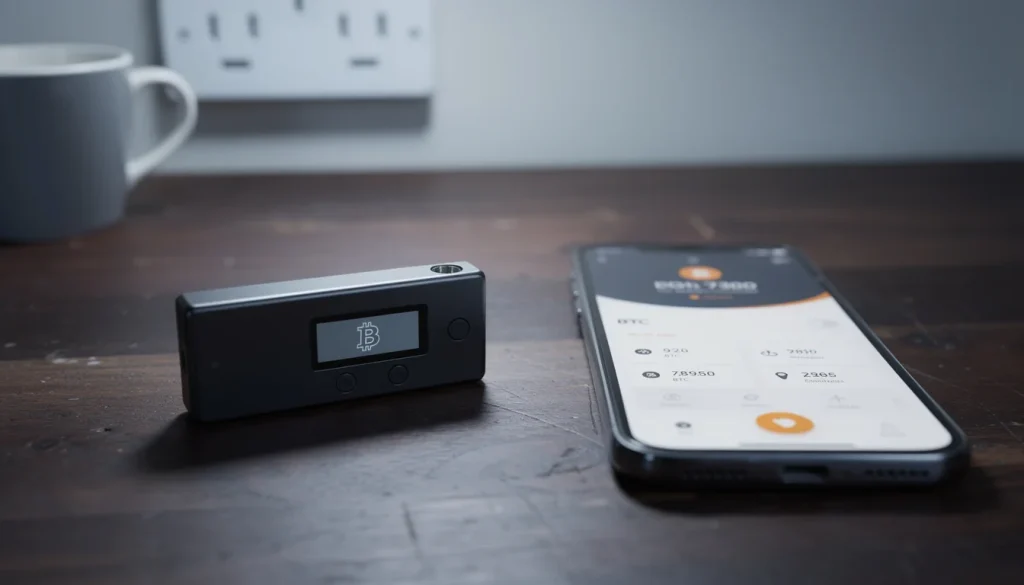
Importance of Secure Crypto Wallet Selection
I’ve watched two friends lose access to betting balances in the same year. Neither lost the money to a bad bet. One lost it because his exchange account got frozen during a routine compliance review. The other lost it because his seed phrase was sitting in a screenshot on a phone that got nicked. Different stories, same lesson: the wallet you choose decides whether your bankroll exists in a form you actually control, or in a form that depends on someone else’s goodwill.
This matters more in 2026 than it did three years ago. With 57% of UK crypto owners holding Bitcoin and the average UK crypto portfolio at around £1,842, the wallet decision affects real money for ordinary punters, not just maximalists. The choice between custodial, non-custodial, hot, cold, mobile and hardware isn’t a tech-bro debate – it’s the operational layer underneath every NBA stake you’ll place this season.
This guide walks through the trade-offs between wallet types for sports betting specifically, the security essentials that apply regardless of which wallet you choose, where each wallet type fits in your funding flow, and the mistakes that most often cost punters bankroll between exchange and sportsbook.
Custodial vs non-custodial: which keys you actually hold
The single most important distinction in wallet land is who holds the private keys. A custodial wallet – like the one inside a UK exchange – is one where the platform holds the keys on your behalf. You see a balance, you can send and receive, but the actual cryptographic control sits with the exchange. A non-custodial wallet is one where you hold the keys directly, usually as a 12 or 24-word seed phrase, and the wallet software is just an interface for using them.
For sports betting, the practical difference is freedom of movement. A custodial wallet on a UK exchange may block transfers to addresses associated with offshore gambling. The blocking varies by exchange and by week – compliance teams update internal blacklists based on UKGC and FCA activity. A non-custodial wallet has no such layer. It moves coins to any address you point it at, no questions asked.
The trade-off is security responsibility. With a custodial wallet, the exchange manages keys, recovery and 2FA. If you lose your password, you go through identity recovery and get back in. With a non-custodial wallet, you manage the seed phrase. Lose the seed phrase, the funds are gone. There’s no helpline, no recovery, no second chance. The seed phrase is the wallet.
The standard recommendation I give punters is to use both: a UK exchange account for the on-ramp from GBP to BTC, and a non-custodial wallet as the operational hub that sends to and receives from the sportsbook. Two-step structure – exchange first, then wallet – gives you both the regulatory entry point and the operational control.
Keeping your funds secure is just as important as managing Bitcoin volatility while your balance sits on the platform.
The four wallet types and where each one fits
Hot mobile wallets – apps that live on your phone with the keys stored on the device – are the workhorses of sports betting. They’re fast to fund, fast to send, and they sit in your pocket where you need them. The trade-off is that any malware on the device theoretically has access to the keys, although modern mobile wallets use secure-enclave storage to mitigate that. Hot mobile is the right choice for working bankroll: the amount you’re cycling through sportsbooks in any given month.
Hardware wallets are physical devices that store keys offline. Transactions are signed on the device itself; the seed phrase never touches an internet-connected machine. Hardware wallets are the standard answer for storage – coins you’re not actively betting with. For sports betting specifically, hardware wallets are overkill on the active bankroll because every transaction requires plugging in the device. But they’re essential for the cold reserve sitting behind your operational bankroll.
Exchange-resident wallets – leaving funds on the exchange – are the worst option for sports betting in the UK in 2026. The exchange may freeze transfers to gambling-adjacent addresses, the funds are exposed to platform risk, and the compliance friction grows every year as the FCA’s October 2027 cryptoasset regime approaches. The cost of moving funds off the exchange is one network fee. The cost of leaving them on indefinitely is a series of slow-burn risks.
Lightning-compatible wallets handle small, fast transactions on the Bitcoin Lightning Network. Some crypto sportsbooks accept Lightning deposits with near-instant settlement and trivially small fees. Lightning is the right choice for high-frequency live betting where you’re cycling small amounts. The limit on Lightning is channel liquidity – single transactions above a couple of million satoshis can be awkward to route – but for typical bet sizes it’s the fastest infrastructure layer available.
Security essentials that apply to every wallet
The seed phrase is the wallet. Anyone with the seed phrase has the funds. The single most common loss I see isn’t hacking – it’s seed phrase carelessness. Screenshots on a phone, photos uploaded to cloud backup, text files synced to multiple devices, paper copies sitting in obvious drawers.
The right approach is offline storage in at least two physically separated locations, neither of them digital. Steel plates designed for seed phrase engraving are the standard. Paper in a fireproof safe works as a backup. Never type the seed phrase into any digital device that has internet access for any reason other than the initial wallet setup or a deliberate restore. Treat the seed phrase like the cash equivalent of your entire wallet balance, because that’s exactly what it is.
Two-factor authentication on every account in the funding chain – exchange, wallet, sportsbook – is mandatory. Hardware-key 2FA is meaningfully better than SMS, and the gap matters more than people think. SIM-swap attacks are real and well-documented; the small inconvenience of a hardware key is worth the protection. App-based 2FA via an authenticator app is the realistic middle ground for most punters.
Address verification on every send is the third habit. Clipboard malware that swaps a destination address mid-paste is a known attack vector. Verify the first six and last six characters of the address on the wallet screen against the destination on the sportsbook screen, every time, before approving. The 30 seconds this takes is the cheapest insurance in the entire flow.
Which sportsbooks support which networks
Crypto sportsbook coverage of networks has expanded steadily through 2025-26. Most major books accept Bitcoin on-chain as standard, with Lightning support at perhaps a third of operators. Ethereum on the mainnet is widely accepted; Layer 2 support – Arbitrum, Optimism, Polygon – is patchier but growing fast. USDT on TRC-20 (Tron) and ERC-20 (Ethereum) are nearly universal; USDC support is more concentrated on ERC-20 and Solana.
The wallet you choose needs to match the networks your preferred sportsbook supports. A wallet that handles BTC and ETH on mainnet only will work for nearly any book but will leave you paying full network fees. A wallet with Layer 2 support – Trust Wallet, Rabby, or a hardware wallet running Ledger Live – gives you cheaper deposit options at the books that support them.
Two practical rules: confirm the network before sending, and never send a token on the wrong network. USDT on TRC-20 sent to an ERC-20 address is gone – the book can’t credit it, and recovery is operationally complex even when technically possible. Every wallet shows the network selector before confirming a send; reading it carefully is the difference between a credited deposit and a lost transaction.
If you’re aligning wallet choice with stablecoin choice for sportsbook funding, the network mismatches between USDT and USDC are particularly relevant – the trade-offs are unpacked in the stablecoin sportsbook guide.
The wallet mistakes that cost more than the wallet itself
The single most expensive mistake is using one wallet for both long-term holding and active betting. Funds get blurred, balances drift, and a single security lapse exposes everything. Two wallets – one cold for storage, one hot for operations – costs an extra five minutes of setup and pays back many times over the first time something goes wrong.
The second mistake is overpaying on transaction fees by sending unconsolidated UTXOs. If you’ve received Bitcoin in many small deposits, sending a large amount later costs network fees proportional to the number of inputs. Periodic consolidation – sending all the small inputs to a single address you control during a low-fee window – saves real money over the course of a season. Most punters skip this; the few who do it spend noticeably less on fees over a year.
The third mistake is not maintaining a transaction record. Every deposit to a sportsbook, every withdrawal, every wallet-to-wallet transfer should be logged with date, amount, GBP value at the time, and the sportsbook or exchange involved. The reason isn’t fastidiousness – it’s that HMRC’s view of Bitcoin disposals requires this information if you ever convert winnings back to GBP. The record is also useful for tracking your real betting ROI in fiat terms, which is the only way to know whether your strategy is actually profitable.
The last mistake is sentimentality. The right wallet for sports betting is the one that works reliably with your sportsbook and your discipline pattern. Picking a wallet because it’s “the one true wallet” or because some forum recommended it ten years ago is the wrong filter. Function, network support, security model, recovery path – those are the variables that matter.
Start your wagering journey safely by selecting a verified basketball crypto betting platform.
Is a hardware wallet overkill for casual NBA Bitcoin betting?
For working bankroll that you"re cycling through sportsbooks weekly, a hot mobile wallet is the right tool – hardware is operational friction without much marginal security gain on small active balances. For the reserve sitting behind your active bankroll, a hardware wallet is the standard answer. Two wallets, two purposes; the hardware wallet earns its place on long-horizon balances.
Can I use a single wallet for both betting and long-term BTC holding?
You can, but it"s a poor security pattern. A single wallet means every operational risk applies to your entire balance, including funds you have no intention of betting with this year. The right structure is two wallets: a hot mobile wallet for the working bankroll and a hardware wallet for the reserve. The cost is a few minutes of setup; the benefit is that one operational mistake never reaches the storage layer.
Articles
Prepared by the Bitcoin Basketball Bets editorial staff.
