
Wagering Requirements on Bitcoin Sportsbook Bonuses: A UK Breakdown
 Available in US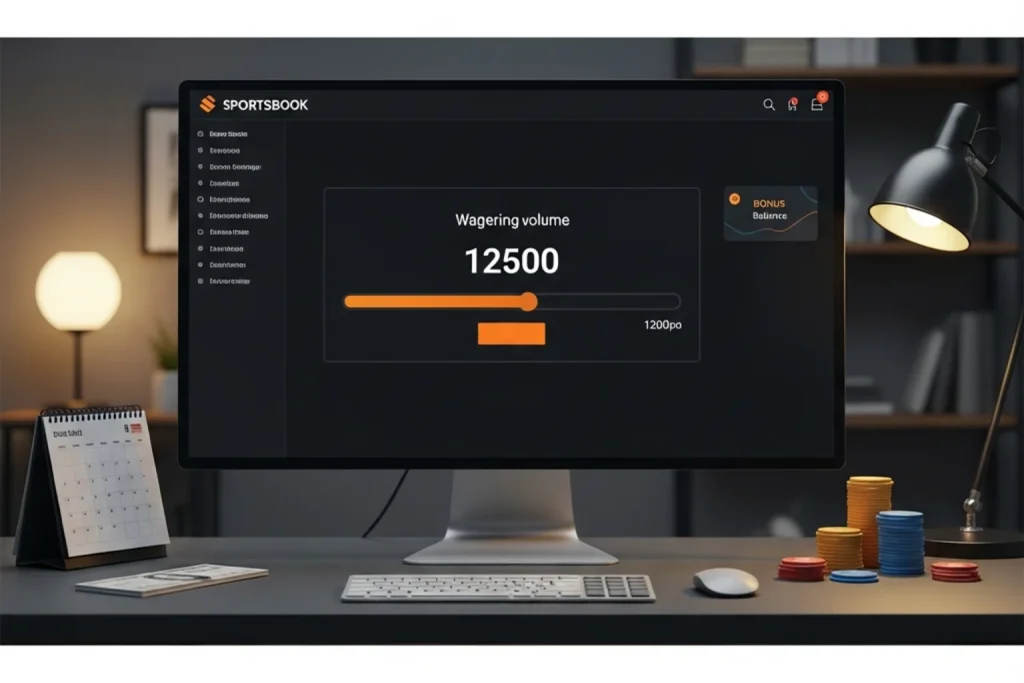
The single number that decides whether a bonus is real money or marketing
I had a conversation with a friend who was about to deposit £2,000 at a crypto sportsbook to claim a “200% match up to 2 BTC” bonus. The headline number sounded enormous. When I asked him what the wagering requirement was, he didn’t know. We looked it up together: 45x on the bonus amount, 30-day window. He didn’t claim the bonus. The maths didn’t work and he’d have been chasing volume that would have inevitably cost him in margin.
The wagering requirement – the multiplier the operator applies to your bonus before letting you withdraw – determines whether a welcome offer is real value or a marketing line. Stake.com, the largest crypto operator globally, generated $4.7 billion in gross gaming revenue in 2024. Its parent Easygo Entertainment posted £135 million in pre-tax profit in 2024-25. Both numbers are built partly on customer-acquisition spend through bonuses that most claimants don’t fully clear. The wagering multiplier is the structural reason that economy works.
This guide covers what wagering requirements actually are, the practical difference between 6x and 30x, basketball contribution rates, time limits and the traps inside them, and how to calculate the real value of any bonus before depositing.
Wagering requirements in plain English
A wagering requirement is a betting volume multiplier the operator applies to your bonus. A 6x requirement on a £100 bonus means you must bet £600 of qualifying volume before the bonus and any winnings become withdrawable as cash. A 30x requirement on the same bonus means £3,000 of qualifying volume.
The bets that count towards wagering are typically defined narrowly in the bonus terms. Standard sports markets (moneyline, point spread, total) at minimum odds typically count at 100%. Live betting often counts at 50-100% depending on the operator. Parlays and combinations often count at less than 100%. Bets below the minimum odds – usually around 1.50 decimal or -200 American – don’t count at all.
The volume requirement is gross, not net. If you bet £600 across multiple wagers and lose half, you’ve still wagered £600 towards the requirement. Wins and losses don’t matter to the wagering counter – only the total stake placed. That’s a critical distinction because it means a player can clear wagering even on a losing run, just by placing the volume.
What does NOT count towards the wagering counter at most operators: returned stakes from void bets, refunded stakes from cashback or cash-out, and bets placed using only the bonus balance once the deposit balance is exhausted. Reading the precise definitions of “qualifying volume” matters more than reading the headline bonus number.
The practical difference between 6x and 30x
A 6x bonus on a £100 deposit-match requires £600 of qualifying volume. For a daily basketball bettor placing £30-50 per bet, that’s two weeks of normal betting routine. Clearing it doesn’t require changing your betting pattern.
A 30x bonus on the same £100 bonus requires £3,000 of qualifying volume. The same daily bettor needs 60-100 betting days to clear it. The bonus likely expires before the requirement is met, which is the operator’s structural advantage – most claimants don’t actually finish the wagering.
The expected value calculation is illustrative. Top crypto sportsbooks run basketball markets at 102-106% total implied probability – the bookmaker’s margin. Across £600 of betting volume at 104% margin, the expected loss to the book is roughly £24. Across £3,000 of betting volume at the same margin, the expected loss is £120. Your bonus pays the margin you’re betting through.
For the 6x bonus: £100 bonus value minus £24 expected margin = £76 expected real value if you finish the wagering. For the 30x bonus: £100 bonus value minus £120 expected margin = negative £20 expected real value. The 30x bonus is structurally a losing claim even if you clear it.
The break-even wagering multiplier at 104% margin is approximately 25x. Above that, the math turns negative; below that, it’s positive. The break-even shifts with the specific margin profile of the markets you’re betting – punters who can find lower-margin markets (regular-season NBA spreads at top-three sharpness) raise their break-even; punters who bet wider markets lower it.
Basketball contribution and why parlays often weight less
The qualifying bet contribution rate is the second multiplier in the wagering equation. Basketball at 100% contribution counts dollar-for-dollar; basketball parlays at 50% contribution count fifty cents on the dollar. A wagering requirement of 10x on a £100 bonus actually requires £2,000 of parlay volume if parlays contribute at 50%, not the £1,000 of straight bets.
Crypto sportsbooks typically structure contribution rates as follows: pre-match moneyline, point spread, and total at 100%; live betting at 100% or sometimes 50%; parlays at 50%; player props at 100%; futures often excluded from contribution entirely.
The structural reason parlays contribute less: parlay margins are dramatically higher than single-bet margins because each leg multiplies the book’s edge. A four-leg parlay at -110 odds per leg implies a 6.5% margin per leg, compounding to roughly 30% margin across the full bet. Operators don’t want to credit wagering volume against bets they’re already winning at 30% margin – the contribution discount preserves their bonus economy.
The practical implication: if a bonus has 50% parlay contribution and 100% basketball contribution, your clearing strategy should lean towards straight basketball bets at the standard point spread or total. Parlays during bonus clearing waste your effective wagering volume.
The other restriction: minimum odds. A standard term requires odds of at least 1.50 decimal (-200 American or +/-100 in moneyline terms) for the bet to count. Betting heavy favourites at -300 or shorter wastes effort – the bet doesn’t contribute towards the wagering counter even if it wins. Most basketball point spreads sit comfortably above the minimum, but live moneylines on dominant favourites mid-game can fall below it.
Time limits and the pitfalls inside them
Bonus time windows range from 7 days to 90 days, with 28 days being the most common standard. The time limit is the constraint that interacts with the wagering multiplier to determine whether the bonus is practically clearable.
A 30x wagering bonus with a 7-day window requires £3,000 of volume in a week – over £400 per day for a £100 bonus. That’s not a normal betting pattern for most punters; clearing it requires either deliberately oversized bets (which compounds variance) or finding markets where the volume can be placed quickly.
The same 30x wagering bonus with a 60-day window is much more clearable: £50 per day across two months matches a normal active-bettor pace. The bonus value is the same; the practical clearability is dramatically different.
The hidden trap in time windows: some operators define the “qualifying period” as starting when the deposit is made, not when the first bet is placed. Other operators define it differently for different bonus components – wagering window for the bonus, separate window for additional restrictions. Reading these terms before depositing is the difference between a clearable bonus and one that quietly expires.
The other pitfall: maximum stake during wagering. Some operators cap your maximum bet size while a bonus is active – typical caps are £20-50 per single bet. If your normal bet sizing is £100, the cap forces you to place 3-5x as many individual bets, which is operationally annoying and compresses your betting routine in ways that affect bet quality.
Calculating the real value before you deposit
The formula for back-of-envelope bonus value: bonus amount × (1 − wagering multiplier × margin × clearing probability). The clearing probability is the chance you’ll actually finish the wagering before time expires or you give up; for a normal pace at a normal multiplier it’s 70-90%, for tight time windows or heavy multipliers it can drop below 50%.
Working example: 100% deposit match of £200, bonus = £200, 10x wagering, 28-day window, basketball at 100% contribution, 104% margin, expected clearing probability 80%.
Wagering volume = £200 × 10 = £2,000. Expected margin loss = £2,000 × 4% = £80. Expected bonus value if cleared = £200 − £80 = £120. Adjusted for 80% clearing probability = £96. The bonus is worth approximately £96 in expected real money to a competent bettor at standard margin.
Same exercise on a 40x bonus: wagering volume = £8,000. Expected margin loss = £320. Expected bonus value if cleared = negative £120. Even at 100% clearing probability the bonus has negative expected value before adjusting for clearing risk. Don’t claim.
The break-even wagering multiplier shifts with your actual margin profile. If you typically bet at sharper books with 102% margins, the break-even rises to about 50x. If you bet wider markets, it drops to 20x. Knowing your own margin profile is part of bonus evaluation.
The deeper analysis of bonus structures and which ones actually pay sits in our piece on rakeback and VIP programmes at crypto basketball sportsbooks – for high-volume basketball bettors, ongoing rakeback often dwarfs the welcome bonus’s value anyway.
How I decide whether to claim
The decision tree I use: check the wagering multiplier first – if it’s above 25x, the math is almost certainly negative for me, so I decline regardless of the headline number. Below 25x, I check the time window – if I can’t clear the wagering at my normal pace, decline. If the math and the time work, I check the contribution rates and minimum odds – both need to align with my normal betting markets, or the practical clearing rate drops below the model.
The bonuses I claim are the ones I’d want to bet at the operator anyway, where the welcome offer is a marginal improvement in expected value rather than the reason for the relationship. The mathematics of bonus-chasing – claiming offers at operators you wouldn’t otherwise use – is structurally bad. The mathematics of bonus-claiming – taking offers at operators that are already on your list – is straightforwardly positive when the multiplier is reasonable.
The single piece of advice that’s saved me money repeatedly: never bet larger than your normal sizing just to clear wagering faster. The bonus is a margin discount on volume you’d place anyway, not a reason to bet outside your normal pattern. The discipline that keeps welcome bonuses profitable is the same discipline that keeps regular betting profitable: stick to your bet sizing, stick to your markets, and let the math work over the period the bonus is active.
How do you compute the true cost of a 30x wagering bonus on a £100 deposit?
The wagering volume is £100 × 30 = £3,000. At a typical 4% basketball margin, the expected margin loss across that volume is £120. The bonus of £100 minus £120 expected margin = negative £20 expected value before adjusting for clearing risk. Above roughly 25x wagering, most basketball bonuses turn negative-EV even when fully cleared.
Why do most crypto sportsbooks weight basketball at 100% but parlays at less?
Single basketball markets like moneyline and spread run at 102-106% margin. Parlays compound margin across multiple legs – a four-leg parlay can carry 25-30% effective margin to the book. Operators don"t credit full wagering volume against bets they"re already winning at high margin, so parlays contribute at 50% or less to preserve the bonus economy.
Articles
Created by the "Bitcoin Basketball Bets" editorial team.
