
How to Spot a Fake or Unlicensed Crypto Basketball Sportsbook
 Available in US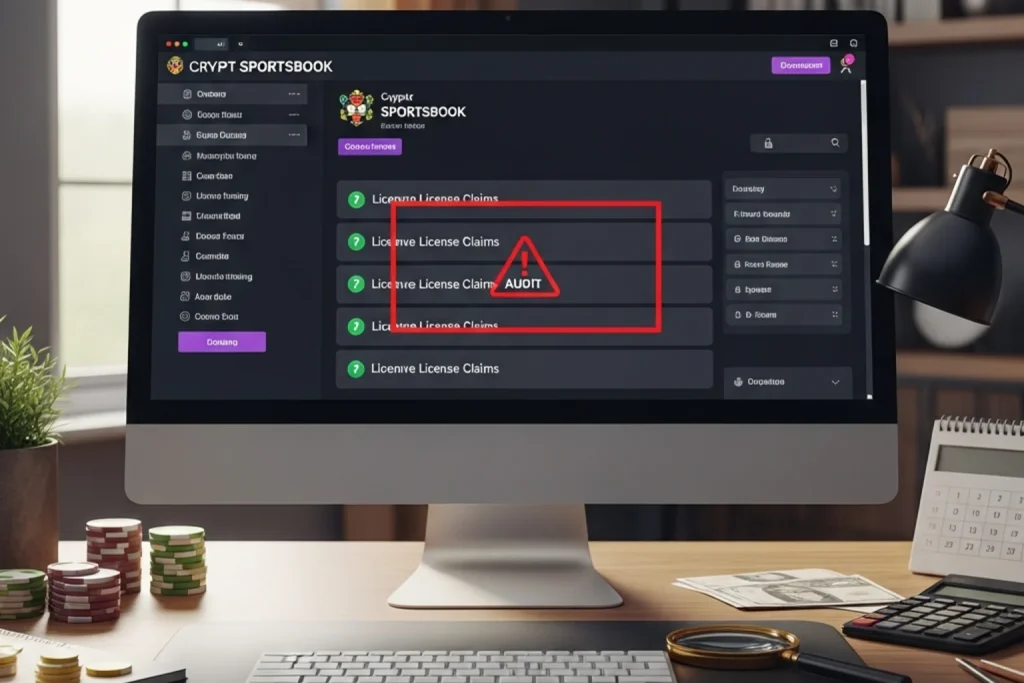
The withdrawal request that took three weeks and then went missing
A reader emailed me in March 2024 about a sportsbook he’d been depositing to for two months. He’d won decent money on the NBA regular season, requested his first significant withdrawal, and the operator kept finding new reasons to delay. KYC documents needed re-uploading. The withdrawal address needed re-verification. Then the website went offline for a “scheduled maintenance” that never ended. He lost the equivalent of about £8,000. The book had never appeared on any standard list of established operators, and a basic check of the licence claimed on the footer would have raised the alarm before he’d deposited anything.
Identifying legitimate crypto sportsbooks matters more than at fiat books because the recourse channels are different. The UK Gambling Commission issued 741 cease-and-desist letters in the 2024-25 enforcement window, with the unlicensed online market estimated at 9% of total UK online gambling activity by value – roughly £379 million in customer activity. The figures show the scale of the problem; they also show that the regulator’s reach extends to enforcement against operators who serve UK customers without proper licensing.
This guide covers why licensing matters even at offshore operators, the practical differences between licensing jurisdictions, the red flags that indicate trouble, the verification checklist before depositing, and what recourse exists if things go wrong.
Why a licence still matters at offshore operators
A common misunderstanding: crypto sportsbooks operating offshore aren’t licensed at all. Most legitimate operators hold licences from regulatory jurisdictions – Curaçao, Anjouan, Costa Rica, the Isle of Man, Malta – that govern their operations. The licence isn’t UK regulatory cover, but it’s not nothing either.
What a licence provides at an offshore operator: a framework for player disputes, audit requirements on their financial controls, anti-money-laundering compliance obligations, and a basic legitimacy threshold the operator has met to obtain and maintain the licence. The regulatory body publishes the licence and the operator’s status; revocation is a real consequence that legitimate operators avoid.
What a licence doesn’t provide: UKGC consumer protections, FCA financial-services protections, or the ability to pursue UK courts for disputes. Players betting at offshore crypto sportsbooks accept that resolution of disputes goes through the licensing jurisdiction’s framework, not UK channels.
The structural problem with unlicensed operators is that no framework exists for dispute resolution. The operator can take deposits, set arbitrary terms, change those terms unilaterally, refuse withdrawals on any pretext, and disappear without recourse. The UKGC’s enforcement reach against unlicensed operators serving UK customers is meaningful – 200,000+ URLs delisted from search engines in 2024-25 – but it doesn’t recover the money lost.
Licensing jurisdictions and what they actually mean
Curaçao is the most common licensing jurisdiction for crypto sportsbooks serving global markets. The Curaçao Gaming Control Board (GCB) restructured its licensing framework in 2023-24, moving from a master-licence-with-sub-licence model to direct licensing of operators. The new framework is more transparent than the old one and creates clearer accountability for operators.
Anjouan (Comoros Islands) has emerged as an alternative jurisdiction for crypto sportsbooks, with lighter regulatory requirements than Curaçao but a less established framework. Anjouan licences are valid but provide less consumer protection than Curaçao licences. Operators that hold only Anjouan licensing should be treated with more caution than those holding Curaçao or stronger licensing.
Costa Rica technically doesn’t license remote gambling – it issues “data processing” permits that operators sometimes describe as licences. A Costa Rica-only operator is effectively unlicensed for gambling purposes despite what the website footer claims. This is the most common false-licence pattern.
The Isle of Man, Malta, and Gibraltar provide stronger licensing frameworks but typically don’t license operators serving customers outside their licensed jurisdictions. An operator with one of these licences serving UK customers is doing so under their offshore framework, which is meaningful for legitimacy but doesn’t extend UK regulatory protection.
UKGC licensing remains separate. As of 2026, no crypto sportsbook holds a UKGC licence to operate with cryptoasset payments. UKGC-licensed operators accept GBP fiat only. The FCA’s incoming cryptoasset regime commences 25 October 2027, after which a path may exist for UKGC-licensed crypto sports betting – but it doesn’t exist yet.
The red flags that indicate trouble
Several patterns repeatedly show up in operator complaints. Licence claims with no verifiable backing – a footer claiming Curaçao licence with no licence number, or a number that doesn’t appear on the GCB’s public register. Withdrawal processing times measured in days rather than minutes – legitimate crypto books process automated withdrawals in minutes; books that take days are either undercapitalised or stalling.
Terms-of-service that allow unilateral changes without notice or arbitrary restrictions on winning players. Clauses that void winnings under vague conditions like “abuse of bonuses” or “fraudulent activity” defined only at the operator’s discretion. Disputes resolved at the operator’s sole discretion with no external appeal.
Marketing patterns that target vulnerable customers: aggressive welcome bonuses with terms designed not to be cleared, pressure to deposit larger amounts immediately, customer support agents who push deposits or VIP signups rather than answering questions.
Operational features that don’t match legitimate operators: no live chat or only chatbot support, business addresses that resolve to mailing services rather than offices, ownership structures that obscure the actual operators behind layers of shell companies in zero-disclosure jurisdictions. Domain registration data that’s recent (less than 6 months) or hidden behind privacy services without independent corroboration.
Marketing channels that rely heavily on affiliate spam – unsolicited emails, comments on basketball forums by accounts with no other activity, social media accounts that promote the operator alongside obvious scam content. Legitimate operators have organic presence; scam operators have purchased presence.
The verification checklist before depositing
The pre-deposit verification I run on any new crypto sportsbook: check the licence number on the relevant regulatory register’s public-facing search. The Curaçao GCB publishes a register at gamingcontrolcuracao.org; Anjouan licences appear on the relevant gaming authority pages.
Check the operator’s corporate structure. Companies House (UK), Curaçao Chamber of Commerce, and similar public registers reveal who actually owns the operator. Operators owned by recognised gaming groups have a track record; operators owned by single-purpose entities in zero-disclosure jurisdictions don’t.
Read the full terms-of-service before depositing. The headlines on the marketing page are designed to attract you; the terms reveal the operator’s actual relationship with customers. Sections on withdrawal limits, bonus terms, account closure rights, and dispute resolution tell you what you’re actually agreeing to.
Check independent review sources, but with scepticism. Operator-paid reviews dominate the affiliate marketing layer for sportsbooks. The Casino Guru complaint forum, AskGamblers, and AccredGaming maintain dispute records that are less easily manipulated. A pattern of unresolved complaints is a stronger signal than 4.5-star average reviews.
Make a small initial deposit and test the full withdrawal process before scaling up. £20-50 deposited, a small bet placed, and a withdrawal attempted. The full deposit-bet-withdraw cycle tells you what the operator is actually like operationally. Legitimate operators clear small withdrawals in minutes; scam operators stall even the smallest amounts.
What recourse exists if things go wrong
The first step at any dispute is direct engagement with the operator’s customer support, escalated to formal complaint status. Legitimate operators have dispute procedures defined in their terms, with response timelines. Document everything from this point onwards – screenshots, emails, transaction IDs, and timestamps matter for any subsequent escalation.
If the operator’s internal process doesn’t resolve the issue, the next layer is the licensing jurisdiction’s regulatory body. Curaçao GCB has a complaint mechanism. Other licensing bodies have similar procedures. The process is slower than UK consumer dispute resolution but can produce results, particularly when the operator wants to maintain its licence.
Public complaints on industry forums sometimes prompt operator responses where direct support hasn’t. Casino Guru’s complaint resolution service has a notable record of recovering funds from operators who would otherwise have stalled indefinitely. The leverage is reputational – operators competing for customer acquisition don’t want unresolved complaints sitting on visible forums.
UK channels for unlicensed operators are limited. The UKGC’s enforcement focuses on preventing future harm rather than recovering past losses. Action Fraud accepts reports but doesn’t typically pursue offshore actors. The Financial Ombudsman handles UK-regulated firms only, which excludes most crypto sportsbooks. The realistic recourse window for an unlicensed-operator dispute is the operator’s own discretion and reputational pressure from public complaints.
The honest takeaway: prevention matters more than recourse. The pre-deposit checks take fifteen minutes and prevent the bulk of problems. Post-loss recourse takes months and often doesn’t recover the funds. Anonymous and pseudonymous betting carries an extra layer of risk that’s covered in detail in our guide to anonymous NBA betting from the UK – the trade-off between privacy and operator accountability matters at the operator-selection stage, not after problems emerge.
What separates legitimate from suspect in practical terms
The honest signal that an operator is legitimate isn’t any single feature – it’s the consistency across multiple features. A real operator has a valid published licence, a verifiable corporate structure, transparent ownership, terms-of-service that match industry norms, operational features that work (fast withdrawals, responsive support, no aggressive marketing pressure), and an independently verifiable track record.
A suspect operator typically has gaps across multiple features. The licence is unverifiable, the corporate structure is hidden, the terms include unusual one-sided clauses, the operational features show stress (slow withdrawals, support that pushes products), and the track record is either nonexistent or full of unresolved complaints.
The new operators that emerge each year are the highest-risk category. Established operators have track records that can be evaluated; new operators are evaluated on structural features alone. A new operator with strong structural features and patient marketing is sometimes legitimate; a new operator pushing aggressive bonuses and presenting only structural surface is almost always not.
The crypto sportsbook landscape continues to consolidate around a smaller number of well-established operators that have survived multiple regulatory cycles, market crashes, and customer-acquisition wars. The newer entrants face significant capital requirements to establish credibility, and most don’t make it. Identifying which category an operator falls into – established and consolidated, or new and unproven – is the most useful starting point for any verification exercise.
Can I check a Curaçao licence number on a public register?
Yes. The Curaçao Gaming Control Board publishes a register of licensed operators at the GCB"s official website. The register lists active and revoked licences. Operators claiming Curaçao licensing whose numbers don"t appear on the register are either lying about the licensing or operating on a deprecated sub-licence that no longer carries regulatory backing.
Which red flags are unique to crypto sportsbooks vs fiat scam sites?
Crypto-specific red flags include withdrawal addresses that appear shared across multiple operators (suggesting common ownership of nominally separate brands), unusual deposit-minimum requirements set in BTC values that don"t match GBP-equivalent norms, and aggressive promotion of new tokens or coins as deposit methods. The combination of pseudonymous addresses and rapid settlement creates patterns that legitimate operators don"t display.
Articles
Written by the editors at Bitcoin Basketball Bets.
